
 English
 Español
 Portugues
 Pусский
 Français
 Deutsch
 한국어
한국어 العربية
 Italiano
 Nederlands
 Svenska
 Polski
 ไทย
ไทย Türk dili
 Indonesia
 Tiếng Việt
 čeština
 Română
 Suomalainen

When a machine needs controlled movement, timing is everything. A Camshaft may look like a simple rotating component, but its profile directly affects how a follower moves, when it moves, how far it travels, and how smoothly the motion takes place. For automated machinery and production equipment, a small change in the cam profile can affect the whole working cycle.
At Dongguan Jifan Precision Machinery Co., Ltd., we provide Precision Camshaft Grinding and Profile Machining Services for customers who need custom mechanical components rather than standard off-the-shelf parts. We work from customer drawings, samples, dimensions, technical specifications, and actual equipment requirements. Our work covers camshaft machining, Profile Grinding, custom cam design, irregular cam grinding, and related precision components.
We are based in Dongguan, China, and our products are used in different types of automated machinery and production equipment. Our customers come from industries such as daily chemical products, biopharmaceutical production, food processing, electronics, plastics and hardware, printing, beverage manufacturing, and other industrial applications.
Our approach is quite practical. We do not simply make a shaft and send it out. We first try to understand what the component needs to do inside the machine. Then we consider the required profile, dimensions, material, working movement, installation conditions, quantity, and inspection requirements. This helps us manufacture a camshaft that fits the actual application instead of producing a component based only on general dimensions.
1. What Are Precision Camshaft Grinding and Profile Machining Services?
A camshaft is a rotating mechanical component that can control the movement of another machine element through one or more cam profiles. In a typical Cam Mechanism, the cam rotates while a follower follows the changing profile. The shape of the cam determines the follower's movement and timing.
This principle is widely used in automatic machines because a rotating input can be converted into a carefully controlled movement. Depending on the design, the follower can move up, down, forward, backward, or remain stationary for a certain part of the cycle. Engineering references describe cam-and-follower mechanisms as a practical way to create predefined motion from rotary movement.
For us, camshaft grinding is not simply removing material from a shaft. The important part is controlling the final cam profile. The finished profile needs to match the intended motion and work correctly with the follower and other connected components.
Profile machining is the machining process used to create the required geometry of the cam surface. Depending on the component, this may involve turning, milling, rough machining, precision machining, grinding, and final inspection. For more complicated shapes, profile grinding becomes particularly important because the final surface geometry has a direct relationship with machine movement.
Our Precision Camshaft Grinding and Profile Machining Services are therefore suitable for customers who require custom camshafts, replacement camshafts, special-profile cam components, and other precision mechanical parts made according to specific equipment requirements.
| Camshaft Element | Basic Function | Why It Matters |
|---|---|---|
| Cam Profile | Defines follower movement | Influences displacement, timing, speed, and motion characteristics |
| Camshaft Body | Supports and positions the cam profiles | Provides structural connection and installation reference |
| Mounting Features | Connect the camshaft to the machine | Need to match the equipment's installation requirements |
| Working Surface | Contacts or drives the follower | Surface condition and profile accuracy affect mechanical operation |
Source note: The functional relationship between cam profiles and follower movement is based on established cam-and-follower engineering principles described by RoyMech. Dimensional and tolerance concepts follow the framework of ISO 286-1:2010 where applicable.
2. How Does a Precision Camshaft Work?
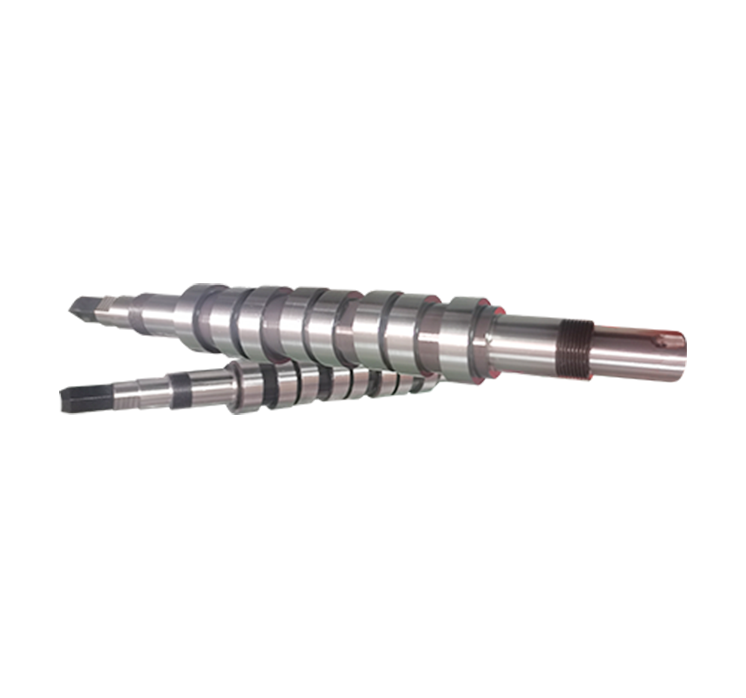
The easiest way to understand a camshaft is to imagine a rotating shape pushing another part through a planned path. As the camshaft turns, the follower follows the changing radius or groove of the cam. The machine can therefore turn continuous rotation into a repeated sequence of controlled movements.
A typical cam cycle can contain several stages. The follower may rise, stay at a certain position, return, and then remain stationary before the cycle starts again. Engineers often refer to these stages as rise, dwell, return, and similar motion segments.
The profile is the heart of the system. If the profile is incorrect, the follower may move too early, too late, too far, or too quickly. That is why a camshaft cannot always be treated like a normal round shaft.
For example, imagine an automatic packaging machine that needs to move a component into position, stop it briefly, perform another operation, and then return the component. The motor may provide a simple rotating movement, but the cam mechanism can convert that rotation into the required sequence. The cam profile determines when each movement starts and ends.
In our work, we pay attention to the relationship between the camshaft and the equipment. We consider the required movement rather than focusing only on the outside appearance of the part. When customers provide drawings or samples, these materials help us understand the intended geometry. When the design needs to be developed or adjusted, we can also discuss the application requirements with the customer.
Several factors can influence the final camshaft design:
Required follower movement and stroke
Camshaft rotational speed
Number and arrangement of cam profiles
Follower type and contact method
Required dwell periods
Installation dimensions
Material and heat-treatment requirements
Expected operating environment
Quantity and production requirements
Required dimensional and profile inspection
These details matter because the same basic camshaft concept can be used in very different machines. A high-speed automatic machine may need a different profile strategy from a slower indexing mechanism. A replacement part may also need to reproduce an existing profile rather than introduce a new design.
That is why we treat custom camshaft profile machining as an application-based manufacturing service rather than a simple machining order.
3. Key Features of Our Camshaft Grinding and Profile Machining
Our main goal is straightforward: manufacture a camshaft that matches the customer's technical requirements and works properly in the intended machine.
Custom Manufacturing Based on Drawings or Samples
We can manufacture according to customer drawings, specifications, samples, dimensions, or equipment requirements. This is useful when the original component is no longer available, when a machine needs a replacement part, or when a new automated mechanism requires a specially designed camshaft.
For drawing-based projects, we review the important dimensions and profile information before production. For sample-based projects, the existing part can provide useful information about geometry and installation. When the customer has only equipment requirements, additional technical discussion may be needed before machining begins.
Precision Profile Grinding
Grinding is an important finishing process for camshaft profiles. Compared with rough machining, precision grinding gives us better control over the final working surface. It can be used after previous machining operations to achieve the required profile and surface condition.
Surface texture and dimensional control are important parts of precision manufacturing. ISO 21920 provides an international framework for the indication and specification of surface texture by profile methods, while ISO 286-1 establishes standardized tolerance concepts for linear sizes and fits.
Custom Cam Design Support
Some customers already have complete drawings. Others have an existing component or a basic idea of the required movement. In these situations, our experience with cam mechanisms, cam design, profile grinding, and precision machining helps us discuss the practical manufacturing route.
We do not assume that one standard cam profile can fit every machine. The working movement, installation space, speed, follower arrangement, and equipment structure all need to be considered.
Dimensional Inspection Before Delivery
After machining, we carry out dimensional inspection, quality checking, and final verification according to the agreed specifications. The exact inspection items depend on the product and customer requirements.
For a precision camshaft, inspection can involve key dimensions, mounting features, profile-related requirements, and other characteristics identified on the drawing. This final checking stage gives both our production team and the customer a clearer basis for confirming the finished component.
| Manufacturing Consideration | Typical Question | Impact on the Finished Camshaft |
|---|---|---|
| Profile Geometry | What movement should the follower make? | Determines the working shape of the cam |
| Dimensional Tolerance | How closely must a feature match the nominal dimension? | Affects fit, assembly, and mechanical positioning |
| Surface Texture | What surface condition is required? | Influences the condition of working surfaces |
| Material | What material and treatment are required? | Influences machining and service characteristics |
| Quantity | Is the project a prototype, replacement, or production batch? | Influences production planning and inspection arrangements |
Source note: Tolerance terminology is aligned with ISO 286-1:2010, while surface-texture terminology and indication are referenced from the ISO 21920 series. Actual tolerances and surface requirements for a specific product should always follow the customer's approved drawing or specification.
4. Our Precision Camshaft Manufacturing Process
A reliable camshaft starts before the machine tool is switched on. We normally begin by reviewing the customer's technical information. This stage helps us understand what needs to be manufactured and what needs special attention.
Step 1: Drawing and Requirement Review
We review drawings, samples, dimensions, material information, quantities, and equipment requirements. For a complex camshaft, we also need to understand the profile arrangement and installation relationship.
If the customer provides a sample, we examine the available physical information and discuss which dimensions or features need to be reproduced. If the customer provides a complete drawing, we use it as the main manufacturing reference.
Step 2: Manufacturing Planning
Next, we determine a suitable machining route. Depending on the component, this can include turning, milling, drilling, rough profile machining, precision machining, grinding, and inspection.
The sequence matters. A camshaft may contain several different features, and machining one feature can affect how another feature is positioned. Good process planning helps us control the relationship between the shaft body, mounting features, and cam profiles.
Step 3: Rough Machining
Rough machining removes the main amount of material and establishes the basic shape. At this stage, the component is not yet treated as a finished precision camshaft. Allowances may be left for later machining and grinding operations.
Step 4: Profile Machining
The required cam geometry is then machined according to the approved design. The profile can be one of the most important areas of the entire component because it directly affects follower movement.
For special or irregular camshaft designs, the machining method depends on the geometry, material, dimensions, and production requirements. This is where experience in Custom Cam Machining becomes useful.
Step 5: Precision Grinding
After earlier machining operations, precision grinding can be used to refine the cam profile and other specified surfaces. Grinding is particularly useful where the finished geometry requires controlled finishing and a consistent working surface.
Our Precision Camshaft Grinding and Profile Machining Services combine these operations according to the actual component rather than forcing every project into the same production route.
Step 6: Inspection and Verification
Once production is complete, we inspect the relevant dimensions and quality characteristics. We then perform final verification against the agreed specifications before preparing the component for delivery.
The production cycle varies from project to project. A simple replacement component in a small quantity is different from a complex multi-profile camshaft requiring special machining and inspection. Material, quantity, customization level, and inspection requirements all affect the schedule.
| Production Stage | Main Purpose | Typical Output |
|---|---|---|
| Requirement Review | Understand the application and specifications | Confirmed manufacturing requirements |
| Process Planning | Select suitable machining sequence | Production route |
| Rough Machining | Create basic component geometry | Machined blank |
| Profile Machining | Form the required cam geometry | Machined cam profile |
| Precision Grinding | Refine specified surfaces and profiles | Finished precision profile |
| Inspection | Verify agreed requirements | Inspected component |
Source note: This process table describes our general manufacturing approach. The actual process sequence varies according to component geometry, material, quantity, drawing requirements, and inspection needs. It should not be interpreted as a fixed process specification for every camshaft.
5. Applications and Industries for Custom Camshaft Machining
Cam mechanisms are useful wherever a machine needs controlled, repeated mechanical movement. Because cam profiles can be customized, the same basic principle can be adapted to many types of automated equipment.
Daily Chemical Production Equipment
Packaging and processing machinery in the daily chemical sector often includes repeated mechanical movements. Custom cam components can be used in mechanisms that require synchronized movement, positioning, feeding, or indexing.
Biopharmaceutical Equipment
Biopharmaceutical production equipment often relies on controlled automation and repeatable mechanical operations. Custom precision components can support specialized mechanisms where standard parts do not match the equipment design.
Food Processing Machinery
Food production and packaging equipment commonly uses automated sequences. A cam mechanism can help coordinate repeated mechanical actions, particularly where the movement needs to follow a fixed cycle.
Electronics Manufacturing Equipment
Electronic component production often requires accurate positioning and repeated operations. Custom camshafts and cam mechanisms can be integrated into automation equipment where controlled mechanical movement is required.
Printing and Beverage Machinery
Printing and beverage production systems can contain high-cycle mechanisms that require repeatable movement. In these machines, the cam profile needs to match the required timing and mechanical sequence.
Plastics and Hardware Equipment
Plastics and hardware production often involves feeding, forming, indexing, cutting, or positioning. Custom cams and camshafts can provide the mechanical movement required for these operations.
Our products are not limited to these industries. The more important point is the machine function. If an equipment designer needs a controlled mechanical movement and a cam-based mechanism is appropriate, we can discuss the required component and manufacturing method.
We also manufacture related precision components such as custom cams, plate cams, conjugate cams, eccentric shafts, crankshafts, and other custom precision mechanical parts. This broader capability is useful when a project contains several connected mechanical components rather than one isolated camshaft.
6. Why Choose Jifan for Precision Camshaft Grinding and Profile Machining?
There are many machining suppliers in the market, but custom camshaft work requires more than general machining capability. The important question is whether the supplier understands the relationship between the component and the machine.
At Dongguan Jifan Precision Machinery Co., Ltd., our business is focused on cam mechanisms, custom cam machining, cam design, profile grinding, irregular cam grinding, eccentric shafts, crankshafts, plate cams, conjugate cams, and other precision mechanical components.
We Focus on Custom Mechanical Components
Our work is centered on customized parts. We understand that customers may have different drawings, machine structures, installation dimensions, movement requirements, and production quantities. We therefore organize the manufacturing process around the actual project.
We Combine Machining and Cam Knowledge
Camshaft manufacturing is not only about cutting metal. The final geometry needs to work with the follower and the machine cycle. Our experience with cam mechanisms and profile machining allows us to consider both the manufacturing side and the mechanical application.
We Support Different Cam Configurations
Our product range includes custom cams, cam mechanisms, plate cams, conjugate cams, eccentric shafts, crankshafts, and other precision components. This means customers can discuss related mechanical parts with the same manufacturing partner when needed.
We Work From Customer Requirements
We can work from drawings, specifications, samples, and equipment requirements. This is especially useful for replacement parts, special-purpose machines, customized automation, and equipment modifications.
We Carry Out Inspection Before Delivery
Before shipment, products go through machining completion, dimensional inspection, quality checking, and final verification according to the agreed requirements. We believe this is an important part of responsible manufacturing.
We Support International Transportation
For completed orders, transportation can be arranged through express delivery, air freight, sea freight, or another suitable method depending on destination and order size. Standard protective packaging is used to reduce the risk of damage during handling and transportation, while customized packaging can be discussed for special requirements.
Payment terms are arranged according to the contract and project conditions. Production time depends on product complexity, material, order quantity, customization, and inspection requirements. Instead of giving a general delivery promise that may not fit every project, we prefer to confirm the schedule after reviewing the actual requirements.
For us, this is a more practical way to handle custom precision machining.
7. FAQ About Precision Camshaft Grinding and Profile Machining Services
What information should I provide for a custom camshaft?
The most useful information includes a technical drawing, sample, required dimensions, material, quantity, equipment application, and any special tolerance or inspection requirements. If the complete drawing is not available, we can first discuss the available sample or machine information to determine what additional data is needed.
Can you manufacture a camshaft from an existing sample?
Yes, we can discuss sample-based manufacturing. An existing component can provide useful information about the physical geometry and installation features. For an accurate replacement, however, we recommend providing as much dimensional and application information as possible.
Do you provide custom camshaft profile machining?
Yes. Custom camshaft profile machining is one of the areas we support. We can manufacture according to customer drawings, specifications, samples, and equipment requirements. The specific machining and grinding process depends on the camshaft geometry and technical requirements.
What is the difference between camshaft machining and camshaft grinding?
Machining is a broad term covering operations used to create the component geometry, while grinding is a more specific finishing process. In a custom camshaft project, machining may create the basic geometry and features, while precision grinding can refine selected profiles or surfaces to meet the required specifications.
Can you manufacture irregular cam profiles?
Yes. We provide irregular cam grinding and Custom Cam Machining Services. Irregular profiles require careful consideration because their geometry is directly connected to the intended machine movement. We review the drawing, sample, or application information before confirming the manufacturing method.
Do you provide cam design services?
We provide cam design support as part of our customized cam solutions. If a customer has a clear motion requirement but needs assistance translating that requirement into a manufacturable cam component, we can discuss the required movement, dimensions, machine conditions, and other technical information.
What industries can use your camshaft components?
Our custom precision components are used for automated machinery and production equipment in daily chemical, biopharmaceutical, food processing, electronics, plastics and hardware, printing, beverage, and other industrial applications.
How long does production take?
There is no single production cycle for every camshaft. Lead time depends on the component's complexity, material, quantity, customization requirements, machining route, and inspection requirements. After reviewing the drawing or sample, we can provide a more practical production schedule for the specific order.
How are finished camshafts inspected?
Inspection requirements depend on the product specification. Our general process includes dimensional inspection, quality checking, and final verification according to the agreed requirements. Specific inspection items should be confirmed from the customer's approved drawing or technical specification.
How are the products packaged and shipped?
We use protective packaging suitable for the product to help reduce the risk of damage during handling and transportation. Depending on destination and order size, products can be shipped by express, air freight, sea freight, or another suitable method. Customized packaging can also be arranged for special requirements.
Can you handle small custom orders?
Custom orders are evaluated according to the component, production requirements, material, quantity, and inspection needs. Whether the project is for replacement parts, machine development, testing, or production equipment, we recommend sending the technical information first so that we can evaluate the manufacturing requirements.
What makes a good camshaft supplier?
In our view, a good supplier should understand more than machining. The supplier needs to understand the relationship between profile geometry, follower movement, installation dimensions, material, manufacturing process, and inspection. Clear communication is also important because custom components often require technical details to be confirmed before production.
Conclusion: Custom Camshaft Manufacturing Built Around the Machine
A precision camshaft is a small component, but it can have a major effect on an automated machine. The profile determines movement, timing, and interaction with the follower. That is why the manufacturing process needs to be controlled from the initial drawing review through machining, profile grinding, inspection, and final verification.
At Dongguan Jifan Precision Machinery Co., Ltd., we provide Precision Camshaft Grinding and Profile Machining Services for customers who need customized mechanical components. Our capabilities include custom cam machining, cam design, irregular cam grinding, profile grinding, plate cams, conjugate cams, eccentric shafts, crankshafts, and other precision parts.
We work according to customer drawings, specifications, samples, and equipment requirements. Our goal is not simply to produce a part that looks correct. We want the finished component to match the intended mechanical function and provide stable, reliable operation in the customer's equipment.
If you are developing new automation equipment, replacing an existing camshaft, improving an old mechanism, or looking for a supplier for custom Precision Cam Components, you can send us your drawing, sample information, dimensions, material requirements, quantity, and application details. We can then review the project and discuss a suitable manufacturing approach.
For custom camshaft projects, the right manufacturing solution usually starts with understanding the machine. Once we understand the movement the machine needs, we can work backward to the profile, machining process, grinding requirements, inspection points, and final component.
Technical Source Notes
ISO 286-1:2010 — Geometrical product specifications, ISO code system for tolerances on linear sizes, tolerances, deviations, and fits. The standard was reviewed and confirmed as current by ISO in 2026.
ISO 21920 series — Geometrical product specifications relating to surface texture by profile methods. ISO 21920-1:2021 provides the published framework for indication of surface texture; a revised committee draft is currently under development.
RoyMech — Cam Followers and Cam System Design — Engineering reference covering cam-and-follower mechanisms, follower movement, cam profiles, motion characteristics, and common cam applications.
