
 English
 Español
 Portugues
 Pусский
 Français
 Deutsch
 한국어
한국어 العربية
 Italiano
 Nederlands
 Svenska
 Polski
 ไทย
ไทย Türk dili
 Indonesia
 Tiếng Việt
 čeština
 Română
 Suomalainen

When a bristle tufting machine has been running for a long time, small mechanical problems can become big production problems. A worn Cam may cause uneven movement, timing changes, vibration, noise, or unstable tufting results. In my experience with Precision Cam Components, the cam is one of those parts that looks simple from the outside but requires careful work inside the machine.
Our German 135 Bristle Tufting Machine Cam is developed for customers who need a reliable replacement or custom-machined cam for bristle tufting equipment. At Dongguan Jifan Precision Machinery Co., Ltd., I work with Cam Mechanisms, Custom Cam Machining, cam design, Profile Grinding, eccentric shafts, crankshafts, plate cams, conjugate cams, and other precision mechanical parts. We do not treat a cam as just a metal disc. We look at how the part works together with the complete machine.
For this reason, I prefer to start with the actual equipment requirements rather than simply asking for the outside dimensions. The cam profile, shaft position, mounting holes, working surface, motion requirements, rotation direction, contact conditions, and installation space can all affect the final design.
The German 135 Bristle Tufting Machine Cam can therefore be supplied according to customer drawings, existing samples, specifications, or equipment requirements. Depending on the project, we can support cam design, machining, profile grinding, dimensional inspection, and final verification before delivery.
1. What Is the German 135 Bristle Tufting Machine Cam?
A cam is a mechanical part used to convert rotary motion into a controlled movement. Instead of simply turning around like a normal round shaft or gear, a cam has a carefully designed profile. As the cam rotates, the follower or connected mechanism moves according to that profile.
In a bristle tufting machine, this controlled movement is important. The machine needs different mechanisms to move at the correct time and in the correct sequence. If the movement is too fast, too slow, too early, or too late, the overall machine action can become unstable.
The German 135 Bristle Tufting Machine Cam is intended for this type of mechanical motion control. Its exact profile and dimensions depend on the corresponding machine design and customer requirements. This is why I do not recommend selecting a replacement cam only by looking at its diameter or thickness.
Two cams can have almost the same external size while having completely different working profiles. They may also use different mounting arrangements or have different motion curves. Installing the wrong cam can result in poor timing even when the part physically fits.
When we receive a new inquiry, I normally pay attention to five basic points:
the machine model and application;
the original cam or technical drawing;
the required dimensions and mounting structure;
the required motion and cam profile;
the material, quantity, surface treatment, and inspection requirements.
This approach helps us make the component according to how it actually works, rather than producing a visually similar part that may not perform correctly.
2. How Does a Bristle Tufting Machine Cam Work?
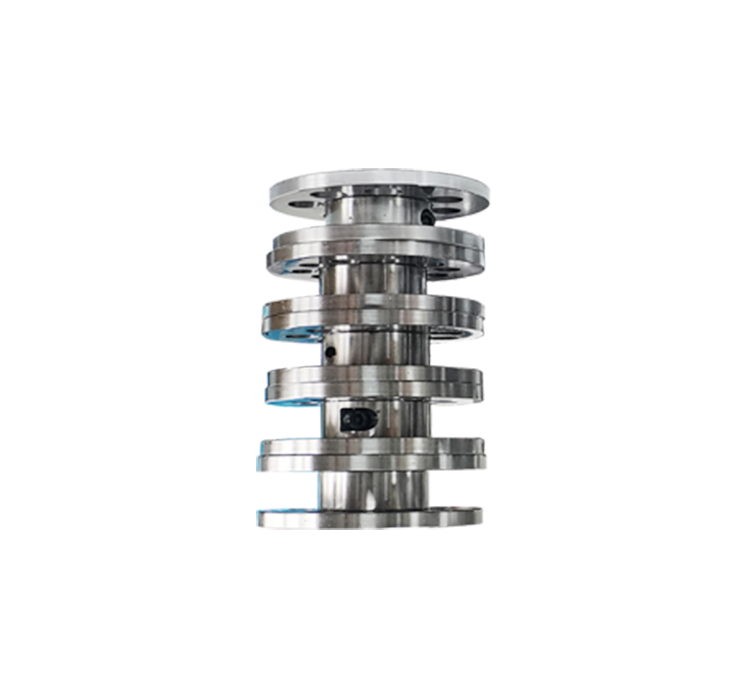
The basic working idea is quite easy to understand. Imagine a wheel with a carefully shaped edge. When the wheel rotates, a follower touches that edge. Because the edge is not perfectly round, the follower moves up, down, forward, backward, or through another controlled path.
That is the basic principle behind a cam mechanism.
For a bristle tufting machine, the cam profile controls the movement of a connected mechanism during a specific part of the machine cycle. The profile can include different sections for acceleration, working movement, return movement, and dwell.
A simple way to think about it is:
| Cam Section | Typical Function | Why It Matters |
|---|---|---|
| Rise | Moves the follower into the working position | Controls the beginning of the working movement |
| Dwell | Holds the follower in position | Allows another machine action to take place |
| Return | Moves the follower back | Controls the recovery movement |
| Transition | Connects different motion sections | Helps reduce sudden changes in movement |
Source: General cam-motion engineering principles; geometric specification and verification concepts are referenced against ISO 1101:2017 for geometrical tolerancing. The exact motion profile of the German 135 cam must be confirmed from the applicable machine drawing or sample.
The important point is that the cam profile is not chosen randomly. It is related to the movement required by the machine. When we manufacture a custom cam, we therefore need to understand the relationship between the cam, follower, shaft, and driven mechanism.
For an existing German 135 bristle tufting machine, an original cam sample can be especially useful when the original drawing is not available. We can use the sample as a reference for dimensions and profile inspection and then confirm the important details with the customer before production.
3. Main Features of Our German 135 Bristle Tufting Machine Cam
From a customer's point of view, the most useful feature of a replacement cam is not simply that it looks like the old one. It needs to fit, move correctly, and work reliably with the existing mechanism.
Precision Cam Profile
The cam profile controls the working movement, so profile accuracy is a key part of manufacturing. We use machining and profile grinding processes according to the requirements of the specific component. The final process depends on the geometry, material, surface requirements, and production quantity.
Custom Dimensions
Different machines can use different mounting dimensions, shaft interfaces, thicknesses, hole patterns, and working profiles. We can manufacture the German 135 Bristle Tufting Machine Cam according to customer drawings or confirmed samples instead of forcing every project into one standard size.
Stable Mechanical Movement
A properly manufactured cam should provide the intended mechanical movement when it is correctly installed with the matching follower and related components. Dimensional accuracy and profile consistency are therefore important for machine stability.
Suitable for Replacement Applications
When an original cam becomes worn or damaged, replacing the complete machine may not make economic sense. A precision replacement cam can provide a practical option when the remaining machine structure is still usable.
Support for Custom Cam Machining
Our service is not limited to one catalog item. We also produce custom cams, plate cams, conjugate cams, eccentric shafts, crankshafts, and other precision mechanical components. This allows us to handle projects where the customer needs more than a simple replacement part.
| Requirement | Our Approach | Customer Benefit |
|---|---|---|
| Original drawing available | Review dimensions, tolerances, profile and material requirements | Clear production reference |
| Original sample available | Inspect sample and confirm critical dimensions | Useful when drawings are unavailable |
| Custom cam required | Review motion and equipment requirements | Better match with the machine mechanism |
| Replacement part required | Check mounting and working dimensions | Helps reduce fitting problems |
Source: Dongguan Jifan Precision Machinery Co., Ltd. manufacturing and inspection workflow provided for this product page. Specific tolerances are determined from the agreed customer drawing or specification.
4. Precision Manufacturing Process: From Drawing to Finished Cam
One thing I have learned from precision mechanical manufacturing is that the final quality of a cam is decided by many small steps. The machining itself is only one part of the job.
Our normal production process starts with reviewing the customer's drawing, sample, or technical requirements. We check the main dimensions, profile information, mounting features, material requirements, quantity, and inspection requirements.
Step 1: Technical Review
Before production, we review the drawing and identify the dimensions that matter most to the machine. For a cam, this can include the profile, center location, mounting holes, keyway, shaft hole, thickness, reference surfaces, and other functional dimensions.
If a customer sends an old cam instead of a drawing, we first need to understand which dimensions can be measured directly and which functional details need confirmation.
Step 2: Material Preparation
The material is selected according to the customer's specification and the working conditions of the part. Different applications can have different requirements for strength, wear resistance, machinability, and surface condition.
We do not recommend choosing a material only because it is commonly used. The correct choice depends on the actual machine environment, loading, speed, contact condition, and expected service requirements.
Step 3: CNC Machining
After technical confirmation, the blank is machined to create the basic geometry. Depending on the component structure, CNC turning, milling, drilling, boring, or other machining processes may be used.
The goal at this stage is to establish accurate reference dimensions and prepare the component for the later precision operations.
Step 4: Cam Profile Processing
The cam profile is one of the most important parts of the component. Depending on the design, we may use precision machining and profile grinding to achieve the required shape.
For irregular cams, the profile cannot be treated like a normal straight edge. Small errors in the working profile can influence the movement of the follower. This is why profile processing needs careful setup and inspection.
Step 5: Dimensional Inspection
After machining, the component is checked against the agreed drawing or specification. Important dimensions may include diameter, thickness, hole location, center position, profile-related dimensions, and other customer-defined requirements.
ISO 286-1 provides an internationally recognized system for linear size tolerances and fits, while ISO 1101 provides a framework for specifying geometrical tolerances such as form, orientation, location, and run-out. We use the customer's specified tolerance system as the production reference when one is provided.
| Inspection Area | Typical Check | Reference |
|---|---|---|
| Linear dimensions | Diameter, thickness, length and other specified sizes | Customer drawing / ISO tolerance system where applicable |
| Geometrical features | Run-out, position, form or orientation where specified | Customer drawing / ISO 1101 principles |
| Cam profile | Profile geometry and functional dimensions | Approved drawing, sample or technical specification |
| Surface condition | Machined and ground working surfaces | Customer surface requirement |
| Final verification | Overall compliance before delivery | Agreed inspection requirements |
Sources: ISO 286-1:2010, current ISO standard for the code system for tolerances on linear sizes; ISO 1101:2017, current ISO standard for geometrical tolerancing.
5. Why Cam Profile Accuracy Matters in Bristle Tufting Equipment
It is easy to focus on the diameter, thickness, and mounting holes of a cam. However, the working profile can be just as important, and sometimes more important.
Think about a door hinge. If the hinge is slightly different from the original, the door may still look normal but may not open smoothly. A cam works in a more controlled way, so its profile directly affects the movement of the connected mechanism.
In a bristle tufting machine, the cam may work together with a follower or linkage. When the cam rotates, the follower follows the profile. The resulting movement is then transferred to another part of the machine.
If the profile has an unwanted deviation, several symptoms may appear:
uneven mechanical movement;
unexpected vibration;
increased contact noise;
inconsistent machine timing;
higher wear on related components;
difficulty achieving stable production conditions.
This does not mean that every small dimensional difference will create a machine problem. The actual effect depends on the machine design, cam geometry, follower type, operating speed, load, and other factors.
That is why we prefer to evaluate the cam as part of the mechanism instead of looking at one dimension in isolation.
For customers who need a German 135 bristle tufting machine replacement cam, this is particularly useful when the original part is worn. We can review the available sample, drawing, or measurements and determine which features should be treated as critical.
6. Applications and Industries
Although this product is designed around a specific bristle tufting machine application, the manufacturing technology behind it can also be used for other precision mechanical parts.
Our cam machining and precision component services support machinery used in several industries, including daily chemical products, biopharmaceutical production, food processing, electronics, plastics and hardware, printing, beverage production, and other automated manufacturing applications.
In these industries, machines often use cams, shafts, linkages, and other mechanical components to create repeated movements. When a machine operates thousands of cycles, small differences in a mechanical part can become more noticeable over time.
For this reason, a custom cam supplier needs to understand more than just CNC machining. The manufacturer also needs to understand how the component is used.
Typical Application Areas
Bristle tufting machinery
Brush manufacturing equipment
Automated production equipment
Custom mechanical assemblies
Motion control mechanisms
Replacement mechanical components
Special-purpose machinery
Industrial automation equipment
If the required component is not exactly the German 135 Bristle Tufting Machine Cam, customers can also send us the drawing or sample of another cam. We can evaluate the machining requirements and discuss whether the part can be manufactured as a custom component.
7. Why Choose Dongguan Jifan for Custom Cam Machining?
At Dongguan Jifan Precision Machinery Co., Ltd., our focus is precision mechanical components and customized machining rather than simply selling generic machine parts.
We have experience with cam mechanisms, custom cam machining, cam design, profile grinding, eccentric shafts, crankshafts, plate cams, conjugate cams, and other Custom Precision Parts. This gives us a broader understanding of how cams are designed and manufactured.
We Start With the Application
When a customer contacts us, I prefer to understand what the component is supposed to do. A drawing tells us the dimensions, but the application can tell us why those dimensions matter.
We Accept Drawings and Samples
Some customers have complete CAD drawings. Others only have a worn original part. Both situations are common in replacement-part projects. We can review the available information and confirm what additional details are required before production.
We Support Custom Production
We understand that industrial customers do not always need a standard catalog item. A custom cam may need a special profile, hole pattern, material, thickness, or mounting structure. Our manufacturing process can be arranged around these requirements.
We Check the Finished Product
Before delivery, products go through machining, dimensional inspection, quality checking, and final verification according to the agreed specifications. This gives both sides a clear reference for the finished component.
We Serve Different Order Quantities
Production arrangements depend on product complexity, material, quantity, and customization requirements. Whether the project involves a replacement batch or a custom mechanical component for a new machine, we can discuss the production plan based on the actual order.
Our customers can also choose suitable transportation according to destination and order size. Express, air freight, sea freight, and other shipping methods can be arranged. Standard protective packaging is used to help prevent damage during handling and transportation, while customized packaging can be discussed for special requirements.
8. German 135 Bristle Tufting Machine Cam FAQ
Q1: Can you manufacture the German 135 Bristle Tufting Machine Cam according to a drawing?
Yes. We can manufacture the cam according to customer drawings, specifications, and confirmed technical requirements. A drawing with dimensions, material, tolerances, profile information, and other important details gives us a clear production reference.
Q2: What if I do not have the original drawing?
You can send us the original cam sample if available. A physical sample can help us understand the basic dimensions and structure. We may also need additional information about the machine, installation position, working mechanism, and critical dimensions before confirming production.
Q3: Can you make a replacement cam for an old bristle tufting machine?
Yes, replacement cam machining is one of the applications we support. For an old machine, the original part may have wear, so it is important to distinguish between the original design dimensions and dimensions affected by wear. We recommend providing the sample together with any available drawing or machine information.
Q4: What material can be used for the cam?
The suitable material depends on the customer's machine requirements, load, speed, contact condition, wear requirements, and other operating factors. We can manufacture according to a specified material or discuss material selection based on the application.
Q5: Do you provide cam profile grinding?
Yes. Profile grinding is one of our core Machining Capabilities. The actual process is selected according to the cam geometry, required accuracy, material, surface condition, and production requirements.
Q6: Can you make other types of cams?
Yes. In addition to the German 135 Bristle Tufting Machine Cam, we work with custom cams, plate cams, conjugate cams, cylindrical or irregular cam profiles, and other custom cam components. Customers can send drawings or samples for evaluation.
Q7: Can you manufacture related shafts or mechanical parts?
Yes. Our product range also includes eccentric shafts, crankshafts, and other custom precision components. When a project requires several related mechanical parts, we can review the requirements together.
Q8: What information should I provide for a quotation?
The most useful information includes the machine model, product name, drawing or sample, material, quantity, required tolerance, surface treatment if applicable, and delivery destination. If the cam is a replacement part, photographs and basic machine information can also help us understand the application.
Q9: How long does production take?
The production cycle depends on the product complexity, material, quantity, machining process, profile requirements, and customization level. After reviewing the technical details, we can provide a production schedule based on the specific order.
Q10: How do you inspect the finished cam?
We carry out dimensional inspection, quality checking, and final verification according to the agreed specifications. The exact inspection items depend on the drawing and the functional requirements of the component.
Conclusion: A Practical Replacement and Custom Cam Solution
A bristle tufting machine cam may be a relatively small component, but its effect on machine movement can be significant. When the profile, mounting dimensions, and working geometry are correct, the cam can perform its intended role as part of the machine's motion system.
For the German 135 Bristle Tufting Machine Cam, we focus on more than making a part that looks similar to the original. We review the available drawing, sample, dimensions, and equipment requirements, then arrange machining and inspection around the actual application.
At Dongguan Jifan Precision Machinery Co., Ltd., we provide custom cam machining, cam design, profile grinding, irregular cam grinding, eccentric shaft machining, crankshaft machining, plate cams, conjugate cams, and other precision mechanical components.
If you need a German 135 bristle tufting machine replacement cam, a custom tufting machine cam, or another precision cam component, you can send us your drawing, sample information, or machine requirements. We can review the technical details and discuss the suitable manufacturing approach before production.
Our goal is straightforward: make the component according to the actual machine requirement, inspect it against the agreed specification, and provide a practical precision-machining solution for your equipment.
Technical Reference Sources
For dimensional and geometrical specification terminology used in this article, we refer to internationally recognized ISO standards where applicable. ISO 286-1:2010 establishes the ISO code system for tolerances on linear sizes, including terminology related to tolerance classes and fits. ISO 1101:2017 establishes the symbol language and rules for geometrical tolerancing, including form, orientation, location, and run-out.
ISO 286-1:2010 — Geometrical product specifications (GPS) — ISO code system for tolerances on linear sizes.
ISO 1101:2017 — Geometrical product specifications (GPS) — Geometrical tolerancing.
Note: The German 135 Bristle Tufting Machine Cam dimensions, material grade, tolerance values, profile parameters, and other product-specific technical data should be confirmed from the customer's approved drawing, sample, or equipment specification. The tables above are intended to explain the manufacturing and inspection approach rather than represent undisclosed original-machine specifications.
